2026-09-04 · 12 min
Is Your Website Costing You Customers? 7 Signs It's Broken (and How to Fix It)
Your site looks fine but the phone isn't ringing. Seven signs an Australian small business website is losing customers — and how to fix each one without a rebuild.
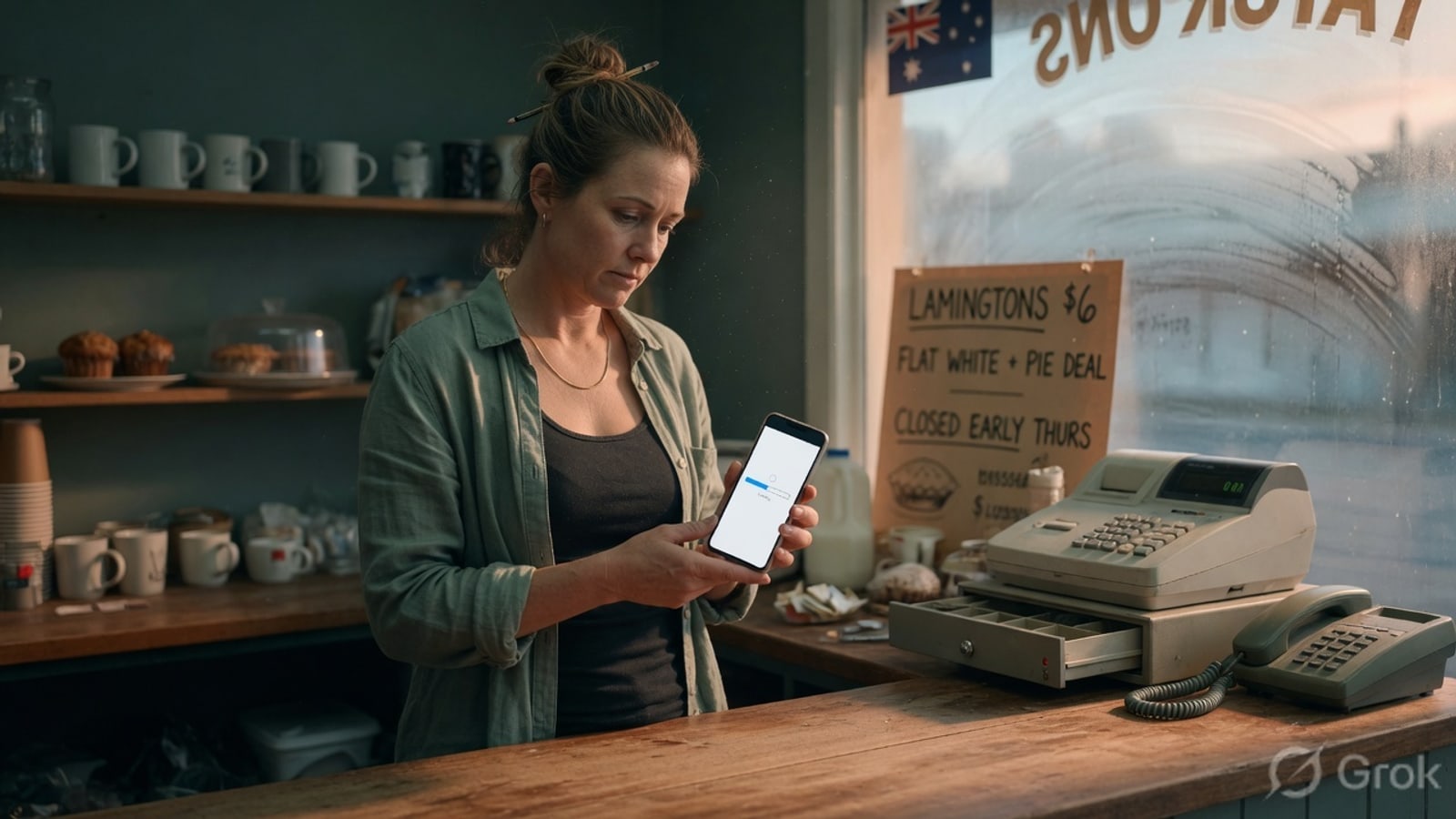
You built the website. You paid for it, or spent a weekend on it, or handed it to a nephew who "knows computers." It's live, it looks fine, and you've moved on.
But here's the problem: the phone isn't ringing. The enquiry form sits empty. And when you ask new customers how they found you, nobody says "your website."
That's not a marketing problem. That's a broken website problem.
According to the Limecube Agency Pulse 2025, approximately 90% of Australian small and medium enterprises struggle with website fundamentals. Not fancy features, not cutting-edge design. The basics. And those broken basics are silently draining leads every single day.
The good news: you almost certainly don't need to start from scratch. Most of these problems have targeted fixes. But first, you need to know which ones you're dealing with.
Here are the seven most common signs an Australian small business website is actively losing customers, and what to do about each one.
Sign 1: It Loads Slowly on Mobile
Open your website on your phone right now, on mobile data, not Wi-Fi. Count the seconds before it's usable.
If it takes more than three seconds, you're losing more than half your visitors before they see a single word. Google's own research confirms that 53% of mobile users abandon a site that takes longer than three seconds to load. For Australian small businesses on shared hosting or DIY builders like Wix and Squarespace, slow load times are one of the most common and most damaging problems.
Why DIY builders are often the culprit:
- Template sites typically load in 4 to 8 seconds on mobile
- Bloated code from drag-and-drop editors confuses search engines and slows rendering
- Unoptimised images (the ones you uploaded straight from your phone) add seconds to every page
A 2024 study of 200 Perth hospitality websites found that DIY builder sites were 2.3 times slower than professionally built alternatives. Slower sites don't just frustrate visitors; they rank lower on Google, which means fewer visitors in the first place.
The fix: Run your site through Google PageSpeed Insights (free). If your mobile score is below 50, this is your highest-priority problem. A freelance web developer can optimise images, fix hosting, and clean up code without rebuilding your entire site.
Sign 2: You Can't Be Found on Google
Search your business name. Then search your main service plus your suburb. For example: "plumber Parramatta" or "bookkeeper Geelong."
If you're not on the first page for either, customers looking for exactly what you offer are finding your competitors instead.
This is an SEO problem, and it's extremely common. The Limecube Agency Pulse 2025 found that 98% of Australian SMEs struggle with search readiness, making it the single most widespread website failure. A further 47% of Australian small businesses with fewer than 20 employees lack a website that meets basic mobile usability standards, according to the Australian Bureau of Statistics' 2024 Business Characteristics Survey.
The most common SEO gaps on small business sites
| Problem | What it means |
|---|---|
| No meta titles or descriptions | Google has nothing to summarise your pages |
| Missing location keywords | You're invisible in local searches |
| No Google Business Profile | You can't appear in the Maps 3-pack |
| Single-page site | One page means one ranking opportunity |
| No SSL certificate | Google flags your site as "not secure" |
The Maps 3-pack, those three business listings that appear at the top of local search results, captures an estimated 40 to 50% of all local search clicks. Getting into it requires a verified Google Business Profile linked to your website. Without that, you're not even competing.
The fix: Set up or claim your Google Business Profile and make sure your website clearly states your services and location. A freelance SEO specialist can audit your site and fix the technical gaps that are keeping you off the first page.
Sign 3: Visitors Arrive But Nobody Makes Contact
You might have traffic. Google Analytics shows visitors. But the enquiry form is quiet, the phone doesn't ring, and nobody's booking.
This is a conversion problem, and it's distinct from an SEO problem. Traffic without conversion means your website is doing its job of being found but failing at its actual job: turning visitors into leads.
The most common cause is a mismatch between what your website says and what visitors need to know to make a decision. Most small business websites are written from the owner's perspective. They describe the business. They list services. They use language like "bespoke solutions" and "we help you thrive."
None of that answers the three questions every potential customer is silently asking:
- Can you actually help me with my specific problem?
- Are you trustworthy enough to give my money to?
- What do I do next?
If your homepage doesn't answer all three within the first screen, visitors leave. Research consistently shows that 75% of consumers judge a business's credibility based on its website design. First impressions form in 0.05 seconds, before anyone reads a word.
Quick conversion checklist
Run through these right now:
- Is your main service and target customer clear in the first sentence of your homepage?
- Is there one obvious call to action (not five competing ones)?
- Is your phone number visible without scrolling?
- Do you have real testimonials or reviews on the page?
- Does your contact form actually work? (Test it yourself, many don't.)
The fix: Rewrite the top section of your homepage to state who you help, what you do, and where you operate. Add one clear path to contact. This is copywriting and UX work, and a freelance content or web specialist can turn it around quickly.
Sign 4: The Design Looks Dated or Generic
You know the look. Stock photos of people shaking hands. A colour scheme that hasn't changed since 2017. A template so common that three competitors in your suburb are using the same one.
Design isn't vanity. It's credibility. And credibility is what converts browsers into buyers.
The numbers make this hard to argue with: 94% of first impressions are influenced by website design quality, and 57% of Australians say they won't recommend a business if its mobile site looks or performs poorly. A business with a neglected website doesn't read as humble or traditional. It reads as either untrustworthy or out of business.
Most Australian businesses redesign their website every 2.3 to 3.1 years to keep up with rising expectations. If your site is older than three years and hasn't been touched, it's almost certainly working against you.
Signs your design is hurting you
- The layout breaks or looks strange on a phone
- You're embarrassed to hand someone your business card because the URL leads to something you'd rather not show
- Fonts, colours, or logos are inconsistent across pages
- There are no real photos of your work, your team, or your location
- The site looks identical to dozens of other businesses in your category
The fix: You don't need a full rebuild. A freelance web designer can refresh your template, update your imagery, and bring your branding into line without starting from zero. Most targeted redesigns cost a fraction of a full rebuild and can be completed in days.
Sign 5: Your Content Is Vague or Out of Date
Content is the part most business owners underestimate. It's not just words on a page. It's the mechanism that convinces a stranger to trust you with their money.
Vague content is one of the most common reasons Australian SME websites fail to convert. The Limecube Agency Pulse 2025 found that 95% of Australian SMEs struggle with content planning, specifically knowing what to say and how to structure it. That's almost every small business in the country.
What vague content looks like
- "We offer a range of services to suit your needs"
- Services listed without prices, processes, or outcomes
- An "About" page that talks about the business history but not why it matters to the customer
- Blog posts from 2021 that nobody has touched since
- No answers to the questions customers actually ask before buying
Outdated content compounds the problem. A services page that still lists something you no longer offer, or pricing that's years out of date, erodes trust the moment a potential customer notices.
The real cost of vague content: Google also reads your content. Pages with thin, generic text rank lower than pages with specific, structured, useful information. In 2026, with AI Overviews now appearing for roughly 40% of commercial queries in Australia, clear and well-structured content is the difference between being cited and being invisible.
The fix: Audit every service page. For each one, ask: Does this page explain who this service is for, what the outcome is, and what happens next? If not, rewrite it. A freelance copywriter can do this in a few hours per page and the SEO impact is often immediate.
Sign 6: The Site Has Broken Links or Broken Forms
This one is quiet and devastating. A contact form that stopped sending emails six months ago. A booking link that goes to a 404 page. A phone number that's no longer active.
Broken functionality doesn't just lose the lead in front of you. It signals to every visitor who encounters it that nobody is minding the store. That signal is hard to recover from.
Run this five-minute check right now:
- Submit your contact form and confirm you receive the notification email
- Click every link in your navigation menu
- Click every button on your homepage
- Try to complete the main action a customer would take (book, call, enquire)
- Check that your phone number is correct and clickable on mobile
It sounds basic. But broken forms are among the most common website problems reported by Australian digital agencies, and most business owners have no idea their form stopped working. The notification email quietly went to spam, the hosting plan quietly changed, and leads quietly vanished.
The fix: This is typically a quick technical job, often under an hour for a web developer. The harder part is knowing it's broken in the first place. If you haven't tested your site end-to-end in the last 90 days, do it today.
Sign 7: You Have No Idea What's Happening on Your Site
If you can't answer these questions, your website is flying blind:
- How many people visited last month?
- Which pages did they land on?
- Where did they come from?
- Where did they leave?
Without this data, you're making decisions about your website based on gut feel. You can't tell whether a change helped or hurt. You can't see that 80% of your visitors are leaving the homepage immediately. You can't spot that your most visited page has no call to action.
Google Search Console and Google Analytics are both free, and most small business owners have never logged in. Businesses that do have access to 3 to 5 times more actionable data about what's working, and what's quietly haemorrhaging leads.
What tracking tells you that gut feel doesn't
- Which search queries are bringing people to your site (and which ones you're missing)
- Which pages have high traffic but low enquiries (conversion problems hiding in plain sight)
- Whether your traffic is growing or declining after changes you made
- Which devices your visitors are using (so you know whether mobile matters more than desktop for your audience)
The fix: Install Google Analytics and verify your site in Google Search Console this week. Both take under 30 minutes to set up. If the technical side feels overwhelming, a freelance web developer can have both running in a single session.
You Don't Need to Start From Scratch
If you recognised your website in three or more of the signs above, the instinct is often to feel overwhelmed and do nothing. Don't.
The most important insight from working with hundreds of Australian small business websites is this: most problems are fixable without a full rebuild. Slow speed, broken forms, vague content, missing SEO basics. These are targeted problems with targeted solutions. A skilled freelancer can often resolve several of them in a single day of focused work.
The real cost isn't fixing your website. It's the leads you're losing every week while it stays broken.
According to a GoDaddy/YouGov survey, two-thirds of Australians won't consider a business they can't find online. And 75% of Australian consumers prefer to purchase from businesses with a credible website. Every week your site underperforms is a week those customers are going to someone else.
What to do next
The fastest path from broken to working is getting a specialist to look at it with fresh eyes. They'll spot problems you've stopped seeing because you're too close to it.
At Tech Aid Australia, you can post your website project and be matched with a vetted Australian freelancer who specialises in exactly what you need, whether that's speed optimisation, SEO, copywriting, or a targeted design refresh. No agency overhead, no lock-in contracts. Just the specific help your site needs, when you need it.
Post your project on Tech Aid Australia and get your website working for your business, not against it.